Our shoulder joint is an incredibly mobile joint that is tasked with a variety of challenges in our everyday lives. These challenges demand both a large range of motion as well as high levels of stability for optimal functioning of this joint. Because of the high demands placed upon the shoulder joint, it is at an increased risk of injury. Well trained and well balanced musculature of the shoulder complex is critical for healthy and fully functional shoulder joint on both athletic competition as well as everyday life tasks.
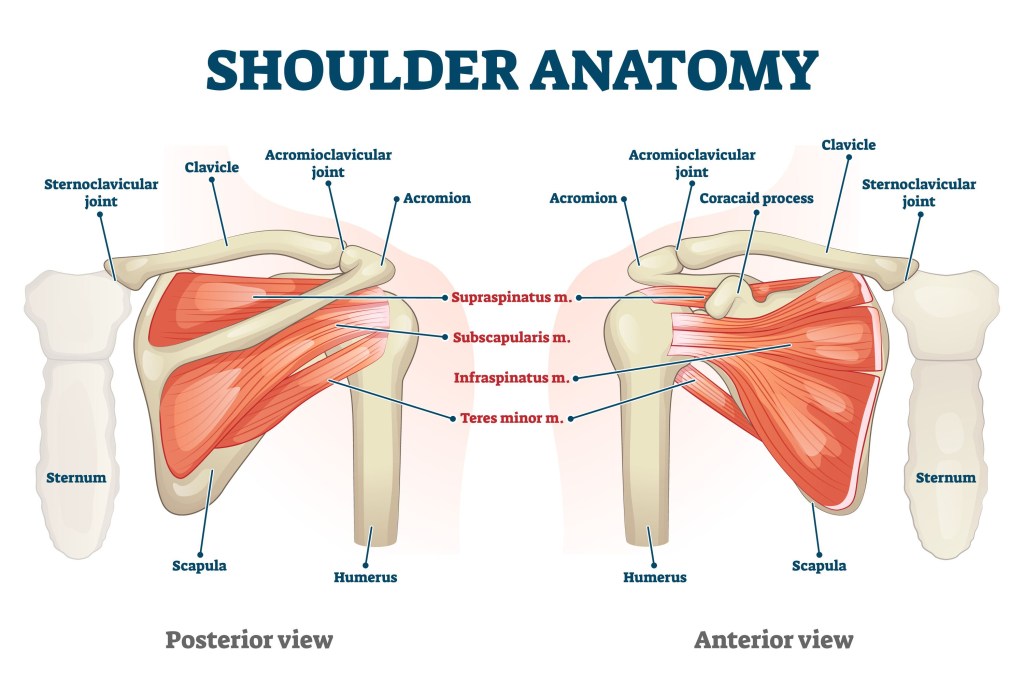
One of the most common diagnoses we treat is referred to as shoulder impingement. This label gets put on a wide variety of shoulder injuries, but it is essentially referring to the compression of the muscles and soft tissues between the humerus and the acromion process. This compression can lead to pain, inflammation, and limited range of motion of the shoulder joint. The causes of impingement can vary from poor postural control and awareness, to muscle imbalances between the anterior and posterior shoulder, to injury to the acromion process itself. Shoulder impingement will limit your ability to train overhead strength and therefore limit your tolerance to overhead sports such as volleyball, baseball/softball, swimming, and tennis to name a few. It can also lead to pain during crossbody motions which then limits tolerance for activities such as golf.
Correcting and preventing shoulder impingement is highly individualized which is why each Doctor of Physical Therapy at Sport & Spine PT performs a full body movement screen during your initial evaluation to be able to determine the best plan for your needs. However, there are 3 main areas that frequently need to be addressed when resolving pain that is the result of shoulder impingement.
1. Correct Posture
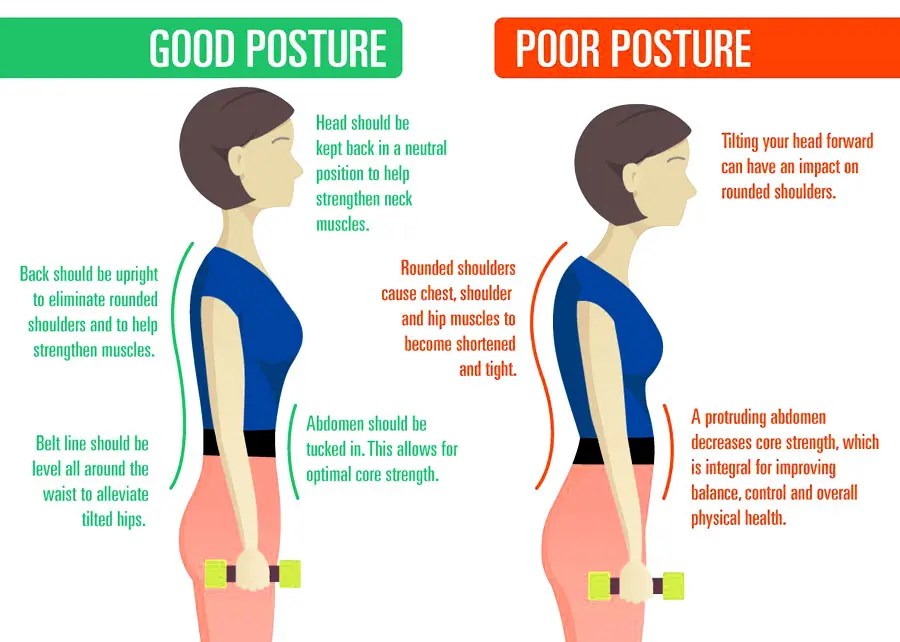
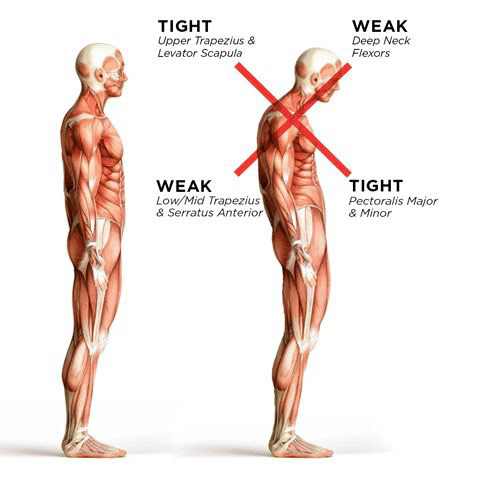
We often see forward shoulder posture as the result of our lifestyle habits such as prolonged sitting, computer usage, driving, and texting. This leads to a combination tightness of the anterior shoulder and weakness in the posterior shoulder. Correcting our posture is simple, but it is not always easy. It involves stretching the tight or limited muscles, usually the pec major, and strengthening the weak muscles, typically the lower trapezius and rhomboids. We also recommend taking frequent breaks from prolonged postures throughout the day. For example, if you work at a computer for most of the day, we recommend standing and walking for a minute at least once an hour.
2. Strengthen Scapular Stabilizers
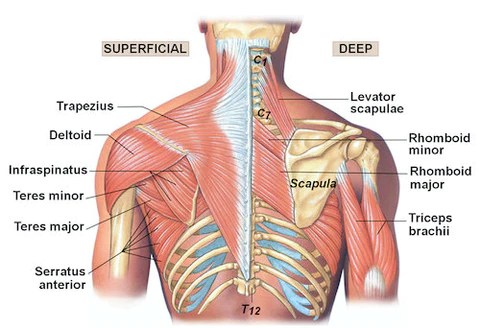
The scapula is commonly referred to as the shoulder blade. Whether it is throwing a fastball, spiking a volleyball, the power phase of your swim stroke, or blocking a 300lb lineman, it is critical to have a scapula that is both mobile AND stable. This is essential to not only prevent injury, but to achieve peak performance as well. Again, the treatment for building scapular stability will look different in each individual as there are many ways the scapula can be malpositioned. During your initial evaluation, the specific scapular muscle groups that need to be strengthened will be identified by your Doctor of Physical Therapy and a gameplan to develop your scapular stability will be implemented.
3. Correct Posture
The shoulder requires a combination of strength and flexibility to function optimally. Unfortunately, imbalances often result from repetitive motions whether that is in sport or work. Most often in overhead athletes, there is weakness in the rotator cuff and lower trapezius that needs to be addressed. These muscle imbalances lead to an increased risk of injury. Correcting these muscle imbalances is key to reducing pain with daily activity as well as preventing injury when participating in overhead sports.
 Sport&Spine Physical Therapy
Leave a comment